Naturalist Notes
California Brown Pelican
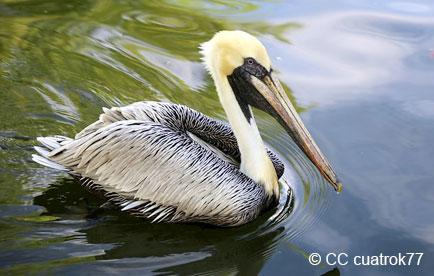
With seven-foot wingspans and giant bills, brown pelicans (Pelecanus occidentalis californicus) are hard to miss as they soar over bodies of salt water. Spotting fish, they can dive at speeds of up to 45 miles an hour, plunging head first, filling their gullets with up to three gallons of water and catch. Removed from the endangered species list in 2009 after decades of restoration efforts, as many as 20,000 individuals spend the summer in the golden state. Before winter, most will head back to warmer southern breeding grounds.
Add observations of Pelecanus occidentalis californicus at iNaturalist.
California Buckeye
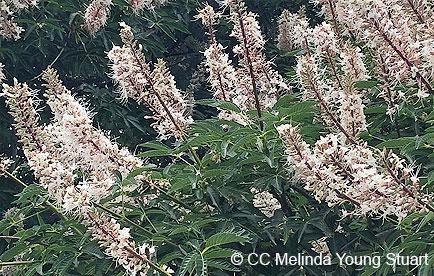
Also called the California horse-chestnut, this multi-trunked deciduous tree can live as long as 300 years. Aesculus californica has adapted well to summer dry conditions, thriving from the central coast to the Sierra Nevada foothills. Striking white flower spikes appear in spring. The show continues when they go to seed–the largest seeds of any non-tropical plant species. But take care, because bark, leaves, fruits, and seeds contain a neurotoxic chemical Scientific name: Aesculus californica.
Add sightings to iNaturalist.
California Quail
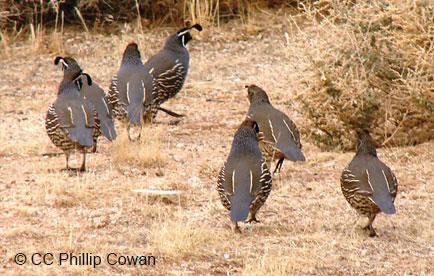
Due to a diet high in seeds, California quails wait until many plants have gone to seed before laying eggs; this makes them one of the latest breeding birds in Marin. Young hatch late spring through summer, are born covered in down, and are able to run immediately and follow their parents to food sources. Males guard their mate and offspring during the breeding season, then neighboring families come together to form large flocks in the fall and winter, when multiple males take turns acting as sentries. Scientific name: Callipepla californica.
Cicada
The reverberating noise of a cicada is synonymous with summer. How can a small insect create such mighty sounds? U.S. Naval researchers unlocked the mystery when seeking to discover how to improve underwater communication. Credit the male cicada’s tymbal organ, which has rib-like bands on a membrane that vibrates rapidly when activated by a special muscle. Males do a version of cicada Pilates 300 to 400 times a second! Cicadas don’t bite or sting, are not poisonous, and generally don’t injure garden plants. So leave them be and enjoy the cacophony.
Dragonflies
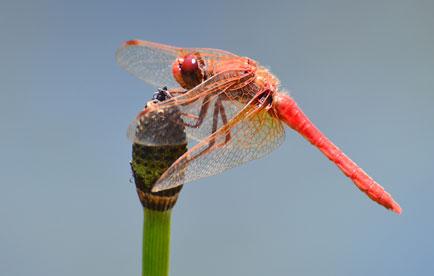
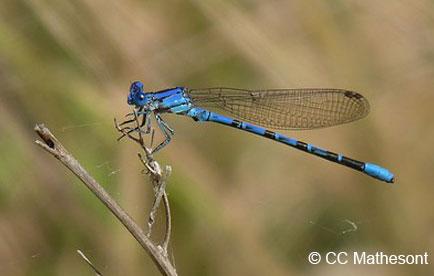
Colorful adult dragonflies grace freshwater ponds and wetlands in summer. Some prefer still water; others like running streams. Look for long, bright blue, green, or orange bodies and delicate wings. Males do acrobatic maneuvers, patrolling back and forth in search of females, who visit ponds, lakes, and streams to lay eggs. Some species of these insects migrate long distances, and can reach speeds of up to 30 miles an hour in flight. Others are homebodies and travel more slowly. Their favorite summer snack is mosquitoes.
Mourning Dove
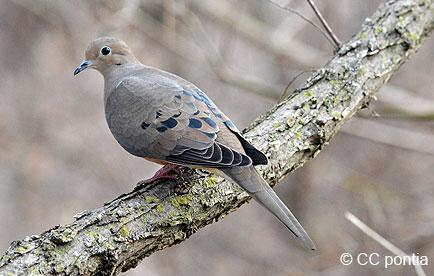
Listen for the soft, haunting call of a mourning dove in morning or evening. They are one of the most abundant and widespread bird species on the continent, living comfortably in close proximity to humans. Mourning doves even build their loosely woven nests and raise their young on house gutters, eaves, or windowsills. Males choose favorite cooing perches; regularly advertising territory with their calls. They feed in open ground, preferring seeds, and are easy to attract to a backyard with grains like millet. Scientific name: Zenaida macroura.